How to Prepare an RFQ That Gets Faster Mold Feedback
Six practical inputs that help sourcing and engineering teams get a usable quote, clearer DFM feedback, and fewer revision loops.
Most RFQs do not stall because the supplier lacks equipment. They stall because the buyer and supplier start with different assumptions about geometry risk, resin choice, validation timing, or delivery expectations.
If you want faster mold feedback, the goal is not to send more files. The goal is to send the right inputs in a format that lets the factory review cost, tooling risk, and launch timing at the same time.
1. Send the Latest Drawing Package
Include both 2D and 3D files when possible. If the design is still moving, say so clearly and highlight the surfaces or features that are still under discussion.
2. Confirm the Resin and Performance Assumptions
Resin choice affects gating, shrinkage, warpage, surface finish, and tool life. Even if the exact grade is not finalized, state the closest current assumption.
Examples:
- PA66 GF30 for structural connector housings
- PBT for sensor covers and electrical shells
- PC/ABS for cosmetic industrial enclosures
3. Explain What Must Pass in Validation
Many quote requests only ask for price and lead time. That is not enough. Buyers should also say what the first samples must prove.
| Review focus | Why it matters |
|---|---|
| Sealing surface | Decides shutoff design and flatness control |
| Clip retention | Impacts parting line and ejector strategy |
| Cosmetic side | Affects gate location and texture planning |
| Mating geometry | Changes inspection checkpoints and sample reports |
4. State the Real Project Timing
If you need T1 in three weeks, say it. If the SOP date is fixed, say that too. Timing pressure changes how the supplier prioritizes DFM, sample planning, and revision handling.
The most useful timing notes are:
- Target quote date
- Desired T1 sample date
- Expected revision windows
- Pilot and mass-production timing
5. Include Packaging and Shipment Expectations Early
For export programs, packaging is not a late-stage detail. Sample labels, carton rules, insert protection, and destination market requirements often change both preparation time and project coordination.
6. Tell the Supplier How Decisions Will Be Approved
Some buyers approve through engineering only. Others need sourcing, quality, and end-customer review before a tool can move forward. That approval structure changes how feedback should be written and how sample documents should be prepared.
A Simple RFQ Checklist
Before you send the inquiry, confirm that you have:
- Latest 2D and 3D files
- Resin assumption or approved grade
- Critical dimensions or validation focus
- Annual volume estimate
- Target sample date
- Packaging and shipment notes
- Approval path inside your organization
Final Takeaway
A good RFQ does not need to be long. It needs to remove ambiguity. The faster a supplier understands the part risk, schedule pressure, and approval rules, the faster the response becomes useful instead of generic.
Related Posts
Client-Overridden Kickoff Package Guide
A markdown-level override that replaces both frontmatter and body for the default demo client.

Understanding Lead Times for Custom Mold and Plastic Part Programs
Why export tooling and production lead times vary, what influences them, and how to plan your timeline around sampling, qualification, and mass production.

Which Certifications Matter When Sourcing Plastic Parts for Export
A practical breakdown of ISO 9001, IATF 16949, CE, RoHS, and REACH, what each one actually verifies, and when buyers should ask for it.
Keep the buyer moving through the right pages
A good export template should connect products, proof, and buyer-facing resources so the next click always has commercial value.
Related products
2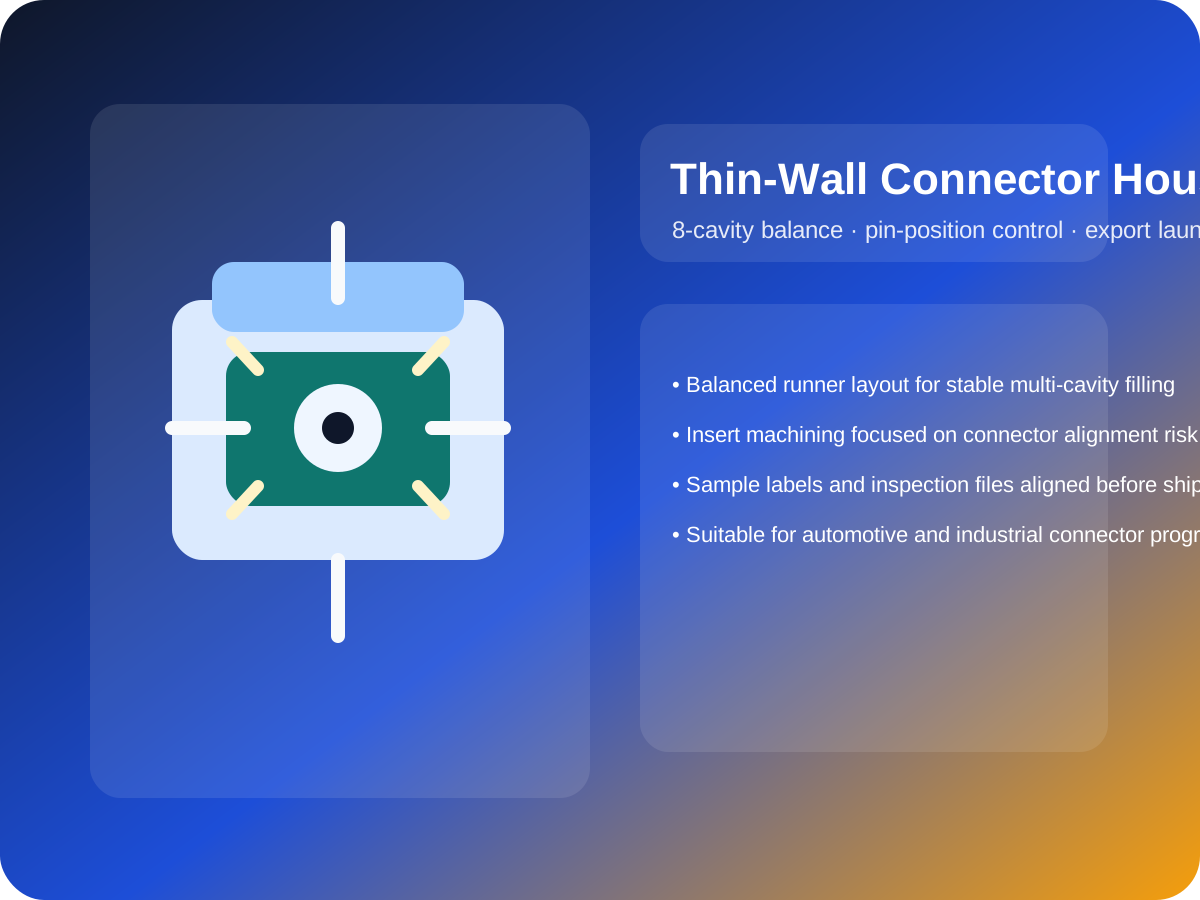
Thin-Wall Connector Housing Mold
High-cavitation export mold for connector housings with stable pin-position control, balanced filling, and repeatable production output.
This page already points to it as the next recommended reference.
Sealed Sensor Housing Mold
A realistic export tooling program for sealed sensor housings with validation-focused planning and launch-ready documentation support.
This page already points to it as the next recommended reference.
Useful resources
2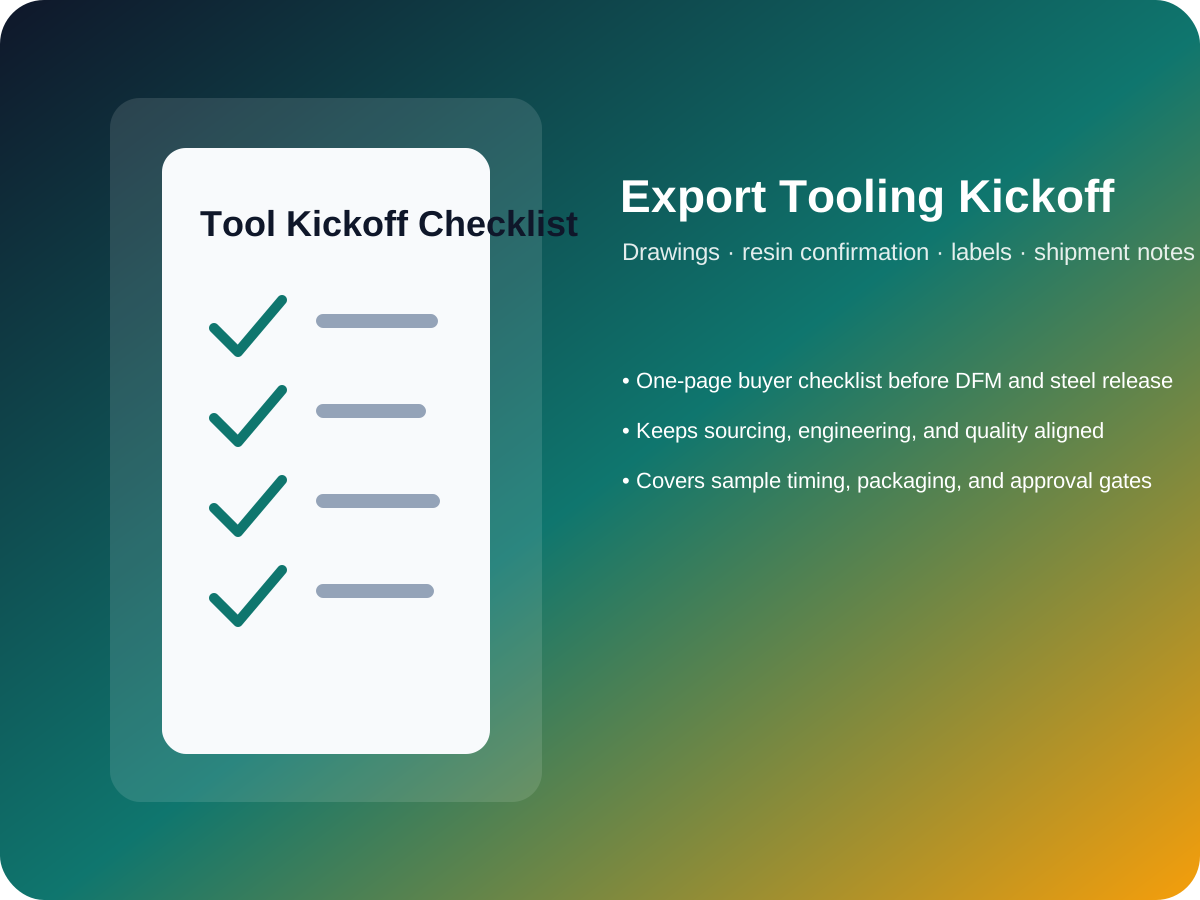
Tool Kickoff Checklist for Export Programs
Buyer-side checklist covering drawings, resin confirmation, sample planning, and shipping notes before tooling release.
This page already points to it as the next recommended reference.
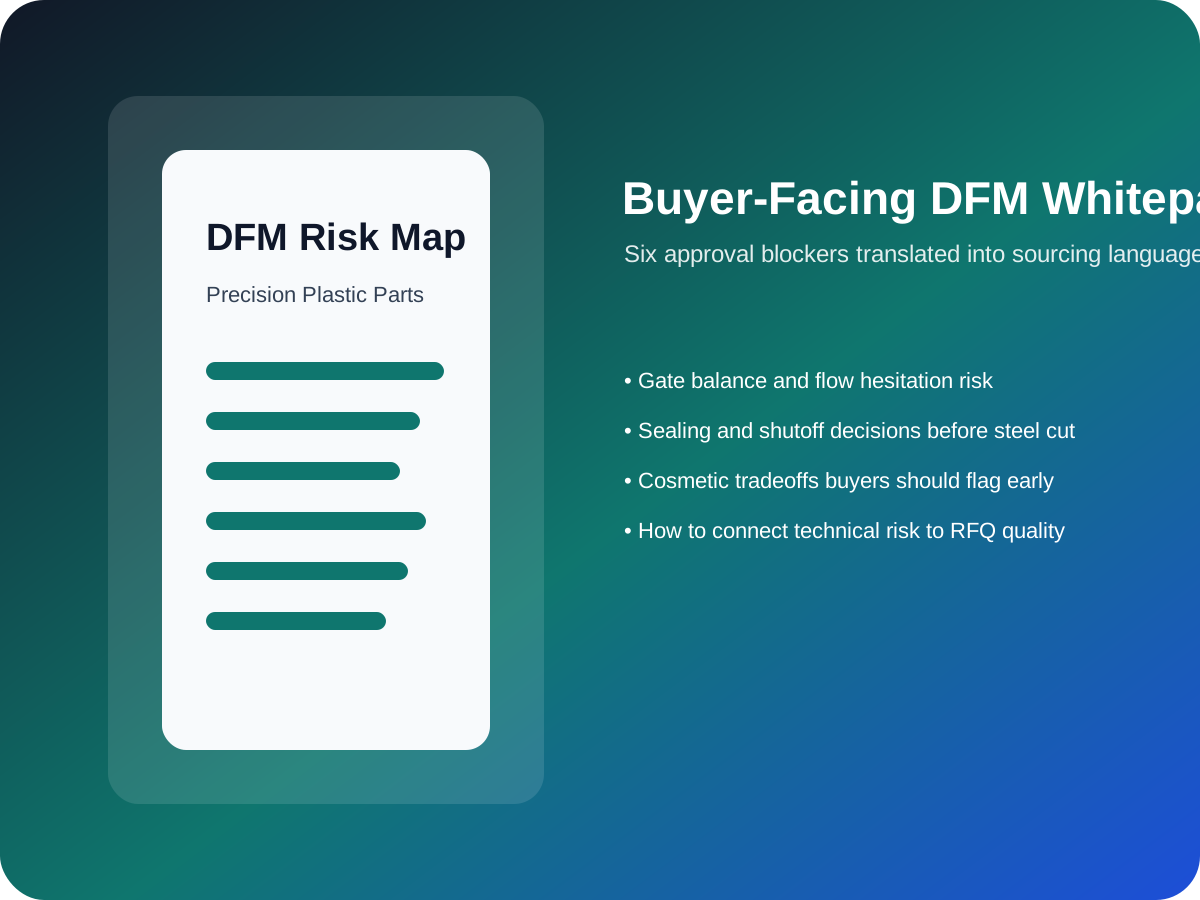
DFM Risk Map for Precision Plastic Parts
A buyer-facing whitepaper on the six mold and part-design risks that most often delay export sample approval.
This page already points to it as the next recommended reference.
Related solutions
1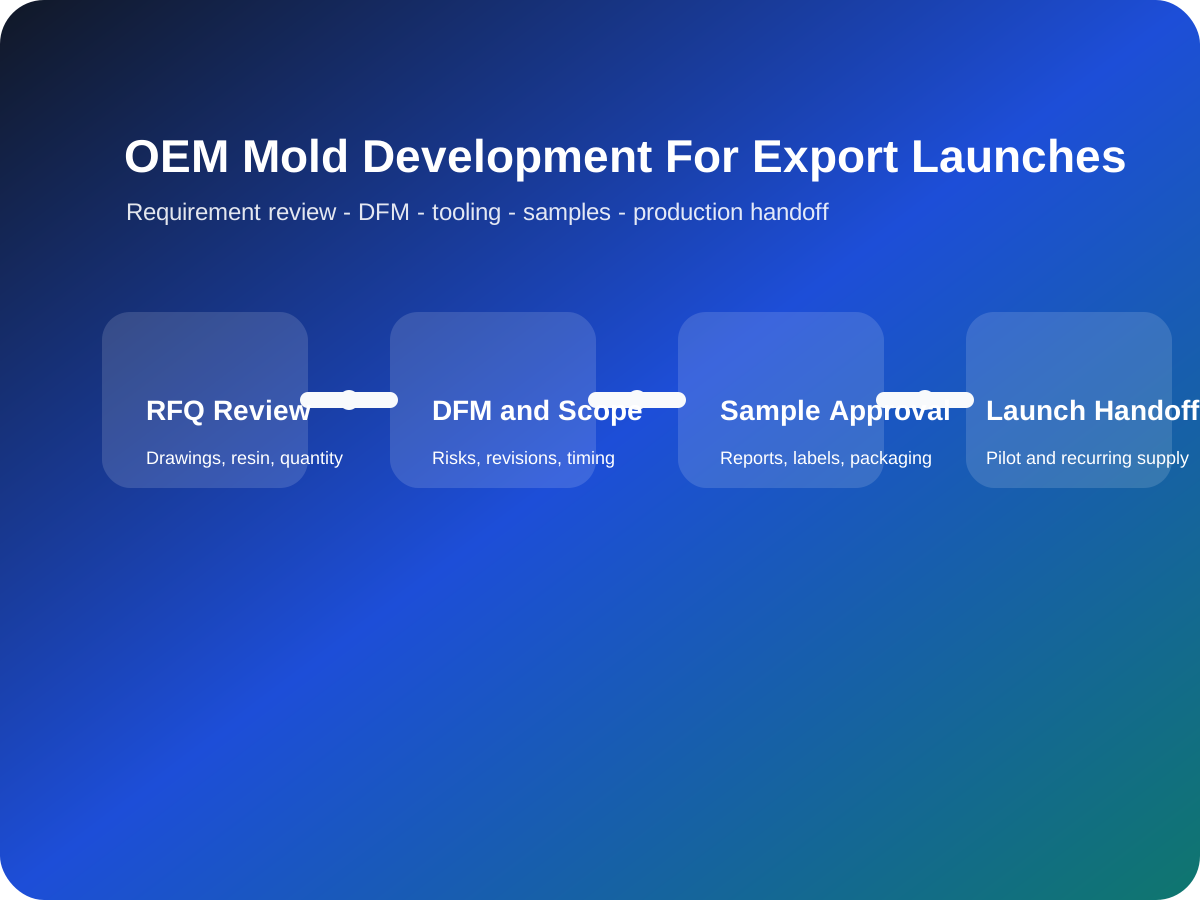
OEM Mold Development for Export Launches
How Northstar moves from requirement review to DFM, tooling, sampling, approval, and mass-production handoff without leaving buyers guessing.
This page already points to it as the next recommended reference.
Relevant case studies
1
EU Sensor Housing Launch with a Four-Week Validation Window
Northstar coordinated DFM clarification, sealing revisions, and export documentation to keep a compressed validation schedule on track.
This page already points to it as the next recommended reference.
Turn the article into a real project conversation
After the buyer finishes reading, keep the next action focused on RFQ, product review, or direct follow-up instead of leaving the journey open-ended.
- Move from general guidance into a product or application discussion.
- Use RFQ when pricing, drawings, MOQ, or launch timing needs structure.
- Keep a direct contact path visible for fast clarifications and handoff.